


Tunisia’s constitutional history is characterized by a long and structured evolution of legal norms, institutional arrangements, and state reforms that have progressively shaped the relationship between law and individual rights. From the mid-nineteenth century reform period to the most recent constitutional developments, this trajectory reflects a continuous process of legal adaptation and institutional reconfiguration.
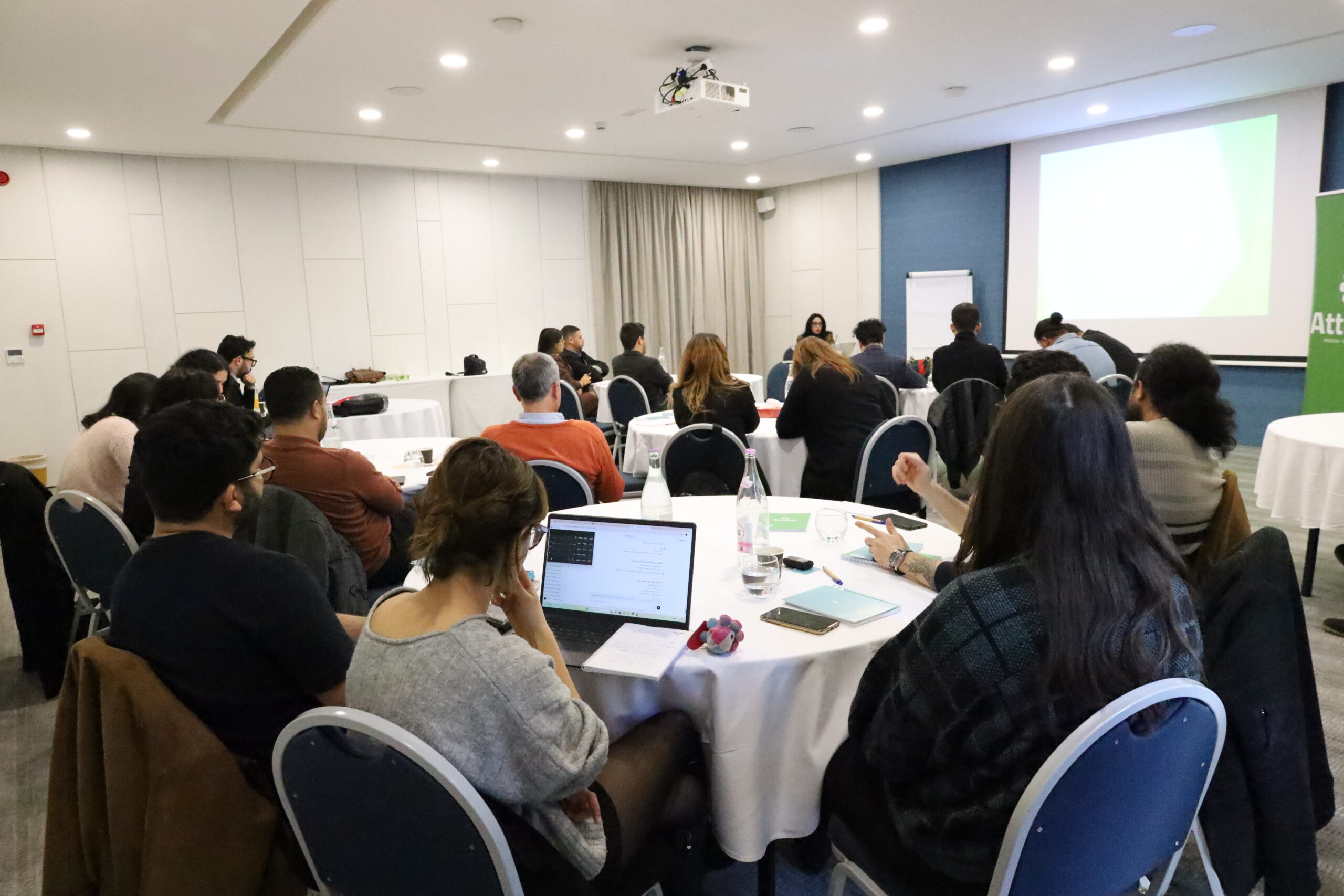
Over the past three years, Attalaki has implemented a structured training cycle dedicated to constitutional evolution and its relationship with religious and belief minorities. Rather than isolated workshops, this initiative has been conceived as a progressive learning process, in which each session builds upon the previous one to examine key stages in Tunisia’s constitutional development and their implications for the legal framework governing rights and freedoms.
Participants included civil society actors, legal professionals, members of religious and belief minorities, as well as representatives of the national parliament. They came from more than ten governorates across Tunisia, contributing to a geographically diverse engagement with constitutional and legal questions.
At the centre of this cycle is Professor Ikram Dridi, public law scholar and regional expert on freedom of religion or belief, and former advisor to the Minister of Women and Family Affairs. Her contribution ensured academic continuity across the three sessions and a consistent reference to Tunisia’s constitutional and institutional framework.
I. Foundations of Religious Freedom and Constitutional Thought (2023)
The first training session introduced participants to the foundational elements of constitutional and legal thought related to freedom of religion or belief. The discussions began with the intellectual origins of natural law theory and its influence on modern human rights frameworks, before addressing the definition and scope of freedom of religion or belief under international legal instruments.
A significant part of the session was dedicated to Tunisia’s constitutional and legal history prior to independence. Participants examined key foundational texts, including the Pacte Fondamental of 1857 and the Constitution of 1861, focusing on their early articulation of principles such as equality before the law and recognition of religious differences within the legal order.
The training also addressed the distinction between belief, non-belief, and conscience, as well as the set of related freedoms such as expression, thought, and academic freedom. Through guided discussions and group exercises, participants were invited to reflect on the legal definition of these concepts and their application within contemporary constitutional frameworks.
This first session established a baseline understanding of constitutional development as a cumulative process, shaped by historical texts, institutional change, and evolving legal interpretation.
II. Constitutional Transformations and the Evolution of the State
The second training focused on the constitutional and institutional transformations that followed independence, with particular attention to the restructuring of the legal system and its impact on the regulation of rights and freedoms.
Participants examined the transition from a historically plural juridical structure to a unified civil legal system. This shift was analyzed in terms of its implications for the regulation of religious practice and the protection of individual rights within a centralized constitutional framework.
The discussions covered the period from 1956 to 2011, with emphasis on the relationship between constitutional guarantees and their implementation in practice. While formal constitutional provisions established principles of equality and freedom of belief, participants analyzed how institutional practice and administrative procedures have influenced the effective application of these guarantees.
Case-based exercises were used to illustrate the interaction between constitutional norms, administrative decision-making, and judicial interpretation. The discussions highlighted the importance of coherence between constitutional provisions and institutional practice in ensuring the effective application of rights.
Throughout this session, constitutional development was approached as a dynamic process involving both legal texts and institutional mechanisms of implementation.
III. Freedom of Conscience and Contemporary Constitutional Developments (2026)
The final training session addressed the contemporary constitutional framework governing freedom of conscience and belief in Tunisia. The discussions were led by Professor Ikram Dridi, alongside Maître Anouar Ajmi, Tunisian lawyer, expert in minority rights, and legal advisor to Attalaki.
The session focused on conceptual distinctions between freedom of belief, freedom of conscience, and freedom of religious practice, situating these within both international legal standards and the Tunisian constitutional context.
A central component of the discussions was a comparative analysis of constitutional developments, particularly the evolution between the 2014 and 2022 constitutional texts. Participants examined how constitutional formulation influences legal interpretation and the structuring of institutional guarantees related to fundamental freedoms.
Beyond textual analysis, the session addressed the practical functioning of legal guarantees, including access to justice, administrative procedures, and institutional interpretation. Real cases were discussed to illustrate how constitutional provisions are applied in practice and how administrative and judicial processes contribute to their operationalization.
The presence of parliamentary representatives contributed an institutional dimension to the discussions, allowing exchanges on the relationship between legislative work, constitutional interpretation, and the implementation of rights within the legal system.
Conclusion
Over a three-year period, this training cycle has contributed to strengthening legal understanding of Tunisia’s constitutional evolution and its relationship with the regulation of religious and belief-related rights. By examining key historical and institutional stages from 1857 to 2022, participants engaged with the continuity and transformation of constitutional norms within Tunisia’s legal system.
The initiative provided a structured framework for analyzing how constitutional provisions are developed, interpreted, and implemented through institutional mechanisms. It also facilitated exchanges between legal experts, civil society actors, and institutional representatives on the functioning of constitutional guarantees within the national legal order.
In a context where constitutional interpretation and institutional practice continue to evolve, such training initiatives contribute to reinforcing legal literacy and supporting informed engagement with constitutional and institutional developments.