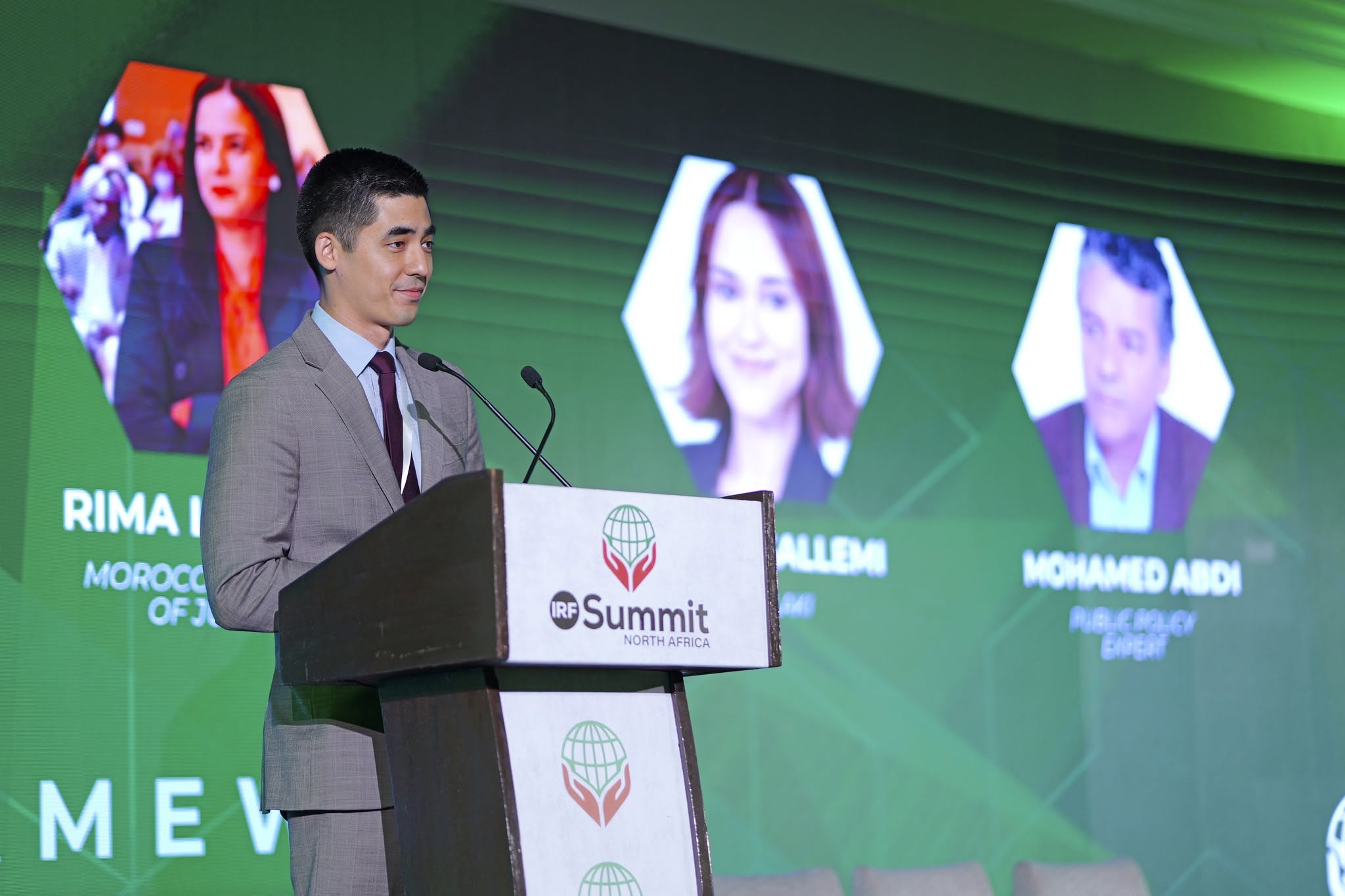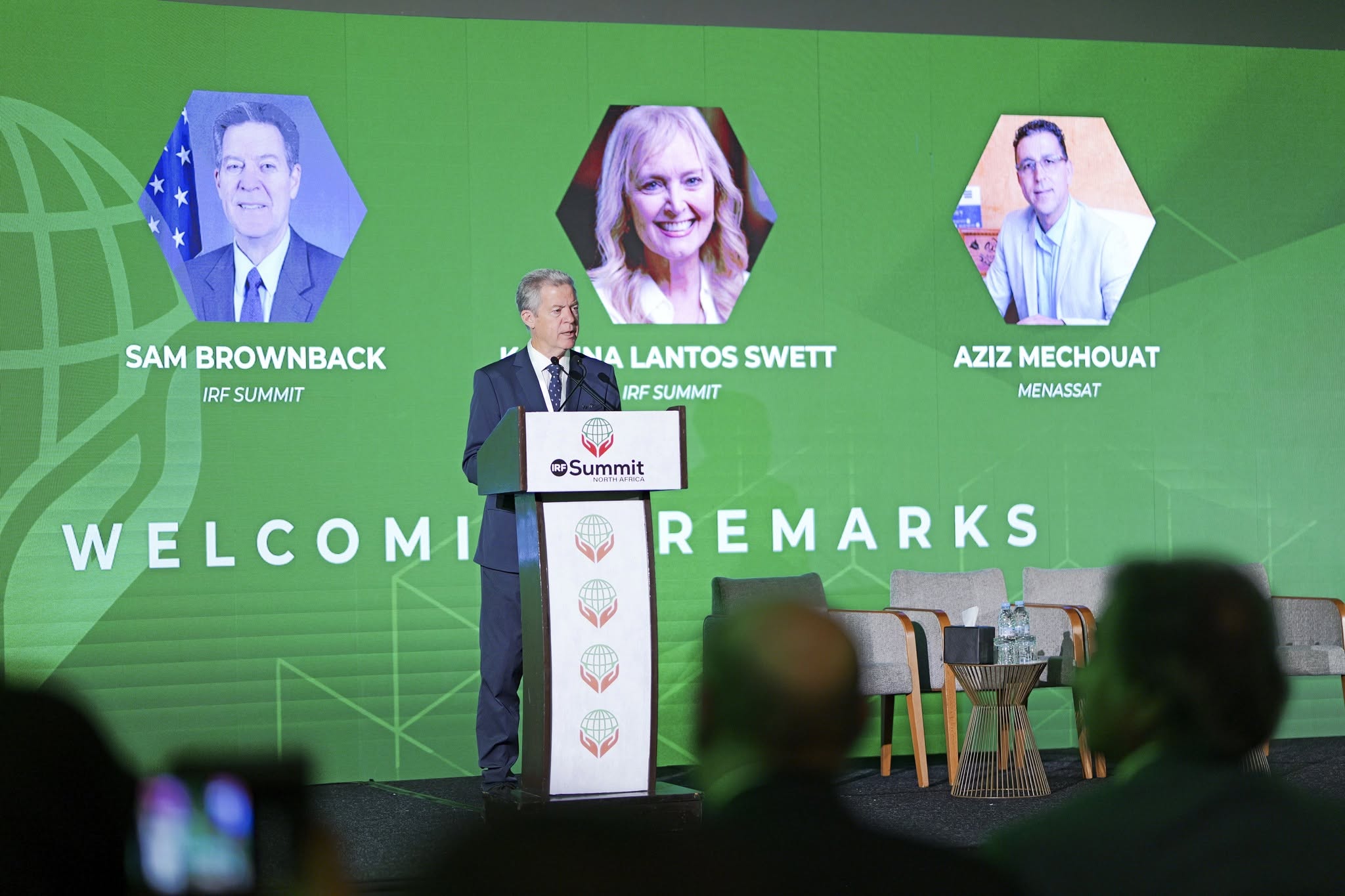


Attalaki joined regional experts and stakeholders at the IRF Summit Regional Conference on Freedom of Religion or Belief in North Africa, held on 21–22 July 2026 in Casablanca, Morocco, under the theme “In Law and Society: Advancing Freedom of Religion or Belief in North Africa.”
The conference brought together regional experts and stakeholders to examine the relationship between religion, law, and society, with particular attention to constitutional frameworks, pluralism, identity, and freedom of religion or belief.
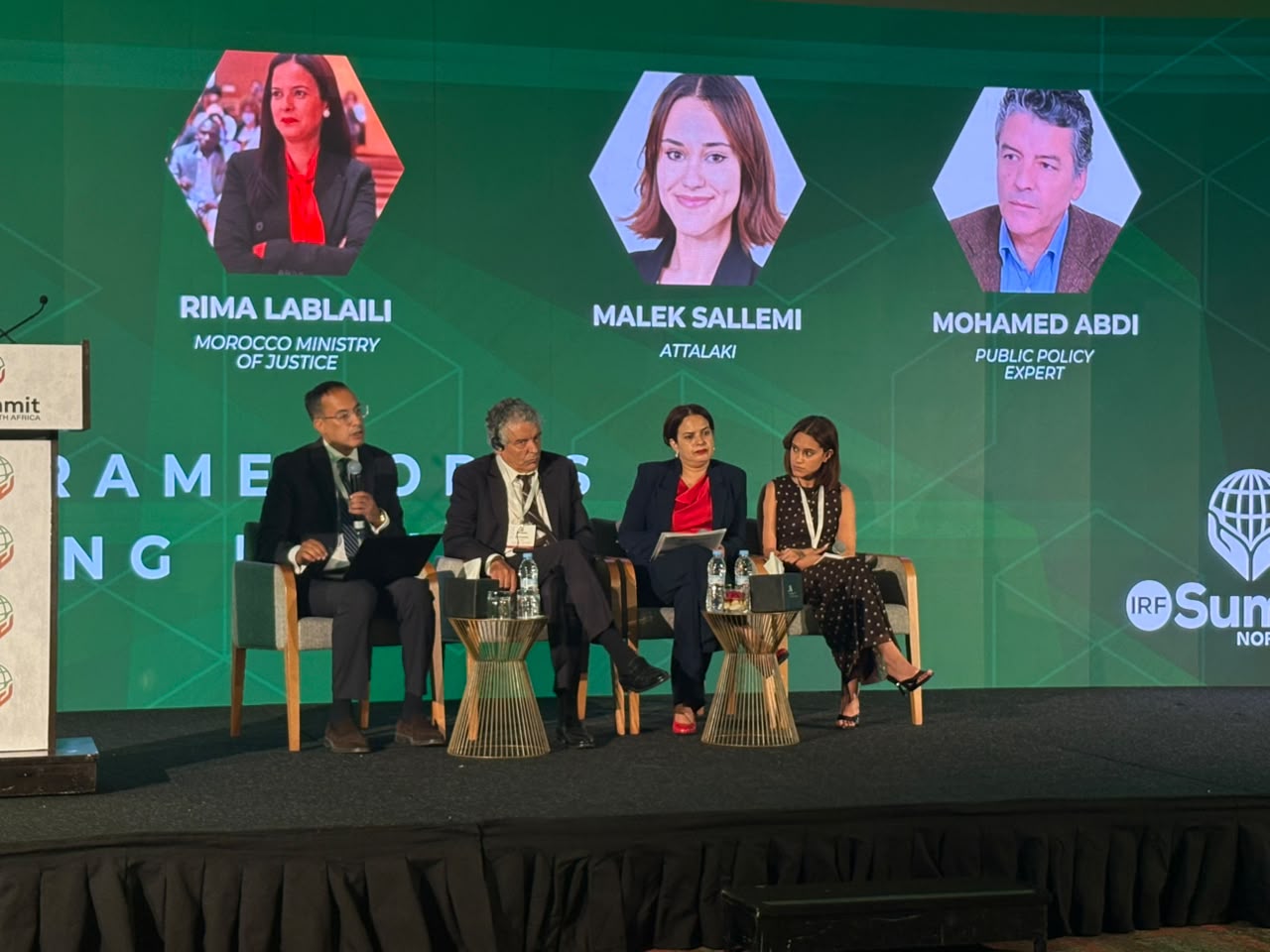
Attalaki was represented by its General Secretary, Ms. Malek Sallami, who participated as an expert in the opening panel of the conference on 21 July, titled “Legal Frameworks Governing Religion.”
Panel on Legal Frameworks Governing Religion
The panel examined how constitutional systems across North Africa regulate religion and how these frameworks affect public order, individual freedoms, and the exercise of freedom of religion or belief. Discussions also considered the role of constitutional institutions, legislation, and judicial mechanisms in translating legal principles into effective protections.
Attalaki’s Perspective
In her intervention, Ms. Sallami emphasized that the strength of a constitutional framework should ultimately be assessed by its ability to guarantee equal citizenship, non-discrimination, and freedom of religion or belief. Drawing on comparative constitutional law, she noted that there is no single model governing the relationship between State and religion. Different democratic systems adopt different approaches, and the decisive question is whether constitutional institutions effectively protect individual freedoms without discrimination.
From Tunisian perspective, Ms. Sallami highlighted Tunisia’s religious and social diversity, as well as its long constitutional history of coexistence and efforts to progressively recognize and protect freedom of religion or belief. She emphasized that constitutional guarantees alone are not sufficient and underlined the essential role of strong and effective institutions in translating these rights into practice and ensuring their effective implementation, not only their recognition in constitutional texts.
Ms. Sallami also addressed the relationship between public order and individual freedoms, emphasizing that restrictions on the manifestation of religion or belief must have a clear legal basis and pursue a legitimate objective. While both public order and the protection of fundamental freedoms constitute legitimate constitutional objectives, she stressed that the line must be drawn when public order is invoked to unjustifiably restrict individual freedoms, particularly freedom of religion or belief.
Finally, Ms. Sallami highlighted the capacity of effective constitutional systems to adapt to changing social realities. Constitutional development, she noted, does not depend exclusively on formal constitutional amendments, but can also take place through institutional practice and the strengthening of effective institutions, including constitutional review mechanisms and constitutional courts. Strong and independent institutions are therefore essential to ensuring that constitutional principles remain effective not only as constitutional commitments, but also through their consistent interpretation and implementation in practice.
In this context, she emphasized that the effectiveness of a constitutional framework depends not only on the principles established in constitutional texts, but also on the institutional mechanisms through which these principles are interpreted, applied, and reviewed. Strengthening institutional capacity and ensuring coherence between constitutional principles, legislation, and administrative practice are therefore important elements of effective constitutional governance.
Conclusion
The IRF Summit regional conference provided an important platform for examining the legal and institutional dimensions of freedom of religion or belief across North Africa. Attalaki’s participation contributed a Tunisian perspective to discussions on constitutional identity, public order, individual freedoms, and international legal obligations.
Attalaki remains committed to contributing to regional discussions that advance freedom of religion or belief, equal citizenship, the rule of law, and the effective protection of individual freedoms across Tunisia, North Africa, and beyond.