


The rule of law constitutes one of the fundamental pillars of democratic governance and the protection of human rights. It ensures that public authorities, institutions, and individuals are equally bound by the law, that legal norms are applied fairly and consistently, and that justice is administered through independent and impartial judicial institutions. Yet, the effectiveness of the rule of law cannot be measured solely by the existence of constitutional guarantees or legislative provisions. Its true strength lies in the capacity of legal practitioners to interpret, apply, and enforce the law in a manner that safeguards fundamental rights while ensuring legal certainty, equality before the law, and public confidence in the justice system.
In contemporary legal systems, this responsibility has become increasingly complex. Constitutional provisions must be interpreted alongside domestic legislation, judicial precedents, and the international human rights obligations voluntarily assumed by States through the ratification of international and regional treaties. Lawyers, judges, prosecutors, legal researchers, and other legal professionals are therefore required to navigate an evolving and interconnected legal landscape where constitutional principles and international standards must be reconciled through rigorous legal reasoning.
This challenge is particularly evident in matters concerning Freedom of Religion or Belief (FoRB), a fundamental human right recognized under international law and protected within Tunisia’s constitutional and legislative framework. Questions relating to freedom of conscience, religious practice, equality, and non-discrimination often require courts to balance competing legal interests while ensuring that restrictions on fundamental rights comply with the principles of legality, legitimacy, necessity, and proportionality. Such cases demand not only legal knowledge but also a high degree of analytical precision, procedural competence, and ethical responsibility.
The Rule of Law Beyond Legislative Texts
The rule of law is often understood through the adoption of constitutions, statutes, and institutional reforms. While these elements are indispensable, they represent only the normative foundation of a legal system. Laws alone cannot guarantee justice. Their effectiveness depends upon the manner in which they are interpreted and applied by legal institutions and professionals.
Every judicial decision contributes to shaping the practical meaning of constitutional rights. Judges interpret constitutional provisions in light of statutory law; lawyers construct legal arguments that invoke constitutional guarantees and international obligations; prosecutors assess evidence while respecting procedural safeguards; administrative authorities exercise their powers within legal limits subject to judicial review. Collectively, these actors transform legal principles into enforceable rights.
For this reason, strengthening the rule of law requires continuous investment in professional legal capacities. Legal education cannot end with university studies or professional qualification. As constitutional jurisprudence evolves and international human rights law develops through the work of treaty bodies, regional mechanisms, and comparative judicial practice, legal professionals must continually refine their analytical skills and deepen their understanding of emerging legal standards.
This process is especially significant in countries where constitutional development and legal reform continue to shape judicial practice. The effective implementation of constitutional guarantees depends not only on legislative clarity but also on the ability of practitioners to integrate multiple sources of law into coherent legal reasoning.
Freedom of Religion or Belief as a Multidimensional Legal Question
Freedom of Religion or Belief occupies a distinctive place within contemporary human rights law because it intersects with numerous areas of domestic legal practice. Disputes involving religious freedom may arise within criminal proceedings, administrative litigation, constitutional review, labour law, education, family law, or matters relating to associations and places of worship. Each context requires careful legal analysis and a nuanced understanding of both substantive rights and procedural guarantees.
Internationally, Freedom of Religion or Belief is protected through a robust legal framework that includes the Universal Declaration of Human Rights, the International Covenant on Civil and Political Rights, and other human rights instruments that Tunisia has ratified. These obligations complement the protections afforded by Tunisia’s constitutional and legislative framework, creating a comprehensive legal architecture designed to safeguard individual freedoms while preserving public order and the rights of others.
Applying these standards in practice is rarely a mechanical exercise. Courts and legal practitioners are frequently required to determine whether restrictions on religious manifestations pursue legitimate aims, whether they are prescribed by law, and whether they satisfy the requirements of necessity and proportionality within a democratic society. Such assessments demand sophisticated legal reasoning rather than subjective or ideological considerations.
Equally important is the principle of non-discrimination. The equal enjoyment of rights irrespective of religion or belief constitutes a cornerstone of both constitutional governance and international human rights law. Ensuring equality before the law requires legal practitioners to identify both direct and indirect forms of discrimination, evaluate factual circumstances objectively, and provide effective legal remedies where violations occur.
Consequently, professional competence in this field extends beyond familiarity with legal texts. It requires the ability to interpret constitutional guarantees, assess factual evidence, reconcile competing legal principles, and articulate persuasive legal arguments grounded in domestic and international law.
Experiential Learning as a Tool for Legal Excellence
Traditional legal education has long emphasized doctrinal analysis, statutory interpretation, and theoretical instruction. While these remain indispensable components of legal training, they are not sufficient on their own to prepare practitioners for the complexity of contemporary litigation.
Experiential learning methodologies—including moot courts, mock trials, and case simulations—have become increasingly recognized as effective tools for strengthening legal practice. Unlike purely academic instruction, simulation exercises require participants to apply legal principles in realistic procedural settings that mirror the dynamics of judicial proceedings.
Participants are challenged to analyse factual scenarios, identify relevant legal issues, determine the applicable legal framework, construct coherent legal arguments, prepare written submissions, conduct oral pleadings, respond to procedural developments, and engage in judicial deliberation. These exercises reinforce technical legal knowledge while simultaneously developing practical competencies such as advocacy, legal drafting, evidentiary assessment, procedural strategy, and professional ethics.
Importantly, simulation-based learning encourages interdisciplinary thinking. Rather than approaching legal questions through isolated statutory provisions, participants learn to integrate constitutional principles, domestic legislation, procedural rules, and international legal standards into coherent legal analysis. This holistic approach reflects the reality of contemporary legal practice, where complex disputes seldom rely upon a single source of law.
Moreover, simulations foster professional dialogue among practitioners from different legal backgrounds. Judges, lawyers, researchers, academics, and law students each contribute distinct perspectives that enrich legal analysis and encourage a deeper appreciation of the challenges associated with rights adjudication. Such exchanges strengthen not only individual competencies but also the broader legal culture that underpins the rule of law.
Investing in Legal Capacity to Strengthen Justice
Capacity-building initiatives should not be viewed merely as educational activities. They represent strategic investments in the quality, consistency, and credibility of legal institutions.
Well-trained legal practitioners contribute to more predictable judicial outcomes, stronger procedural safeguards, improved legal reasoning, and greater public confidence in justice systems. Their expertise enhances the implementation of constitutional guarantees while supporting compliance with international legal obligations voluntarily undertaken by the State.
In the field of Freedom of Religion or Belief, these investments acquire particular significance. Cases involving religious diversity often engage deeply held convictions while raising complex constitutional and legal questions. The legitimacy of judicial outcomes therefore depends upon the impartial application of legal principles rather than political, ideological, or societal pressures.
Continuous professional development enables legal practitioners to navigate these complexities with confidence and independence. It reinforces ethical standards, promotes rigorous legal methodology, and encourages decisions grounded in objective legal analysis. Ultimately, this contributes to a justice system capable of protecting fundamental rights while maintaining public trust and institutional legitimacy.
A Practical Contribution to Strengthening the Rule of Law
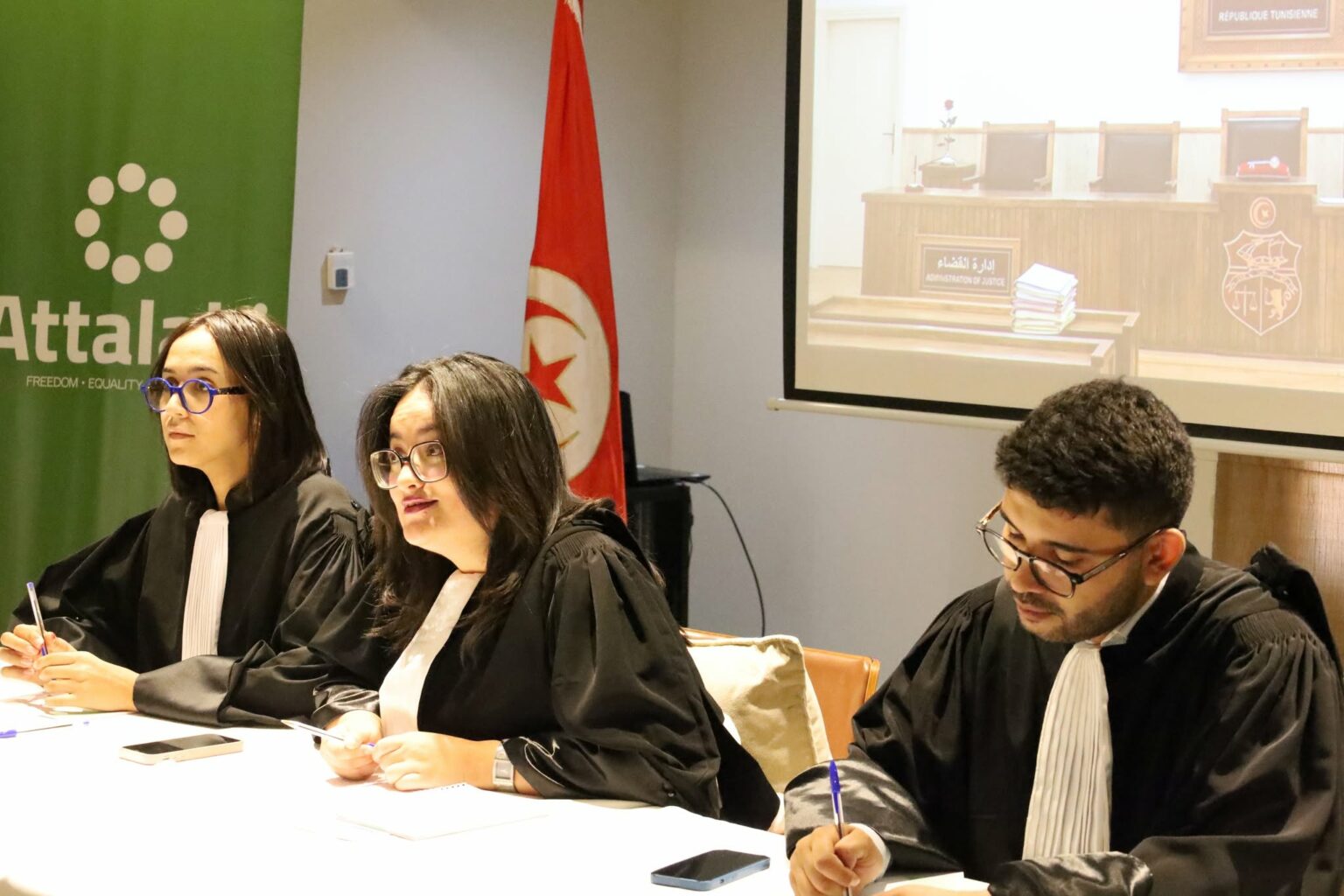
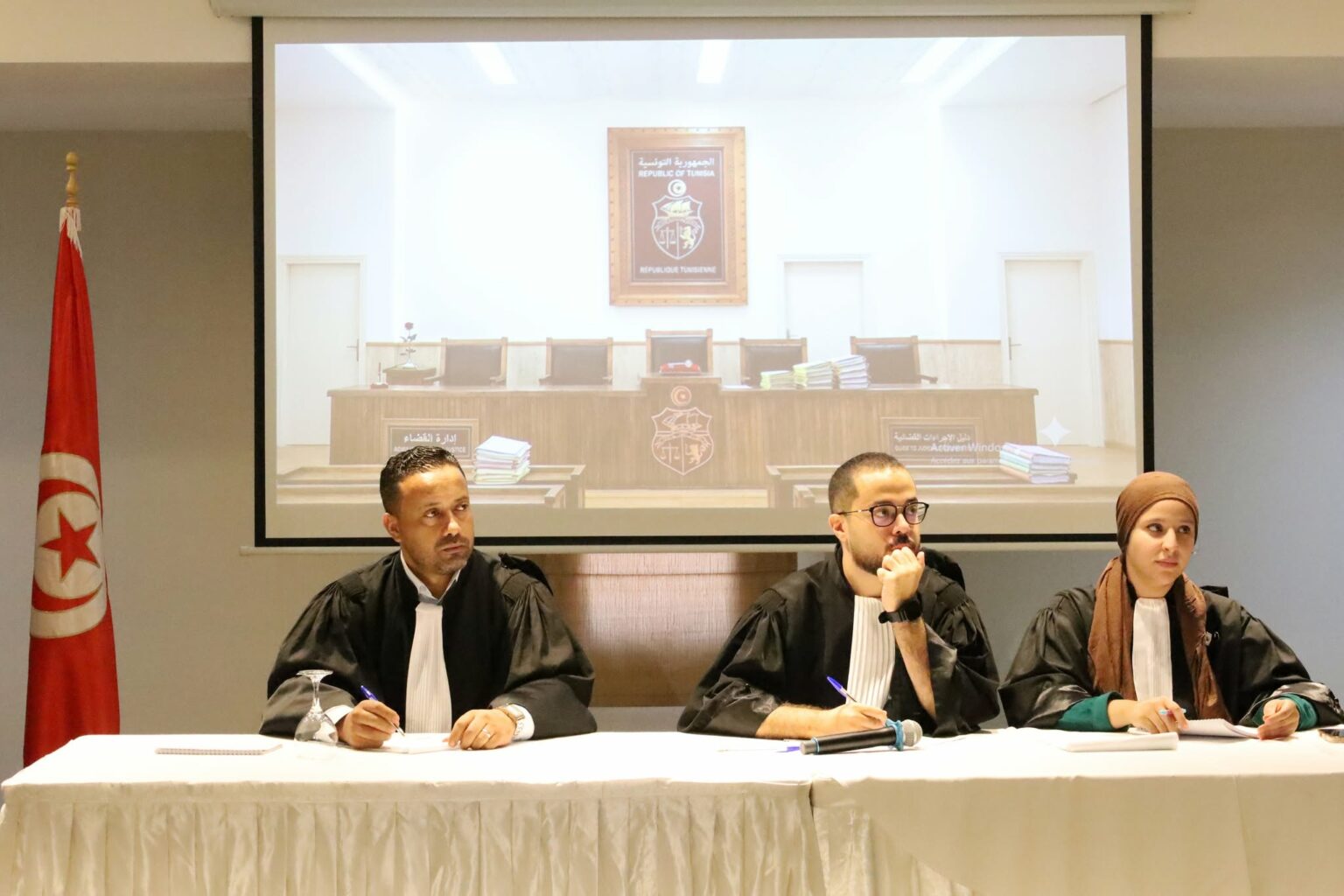
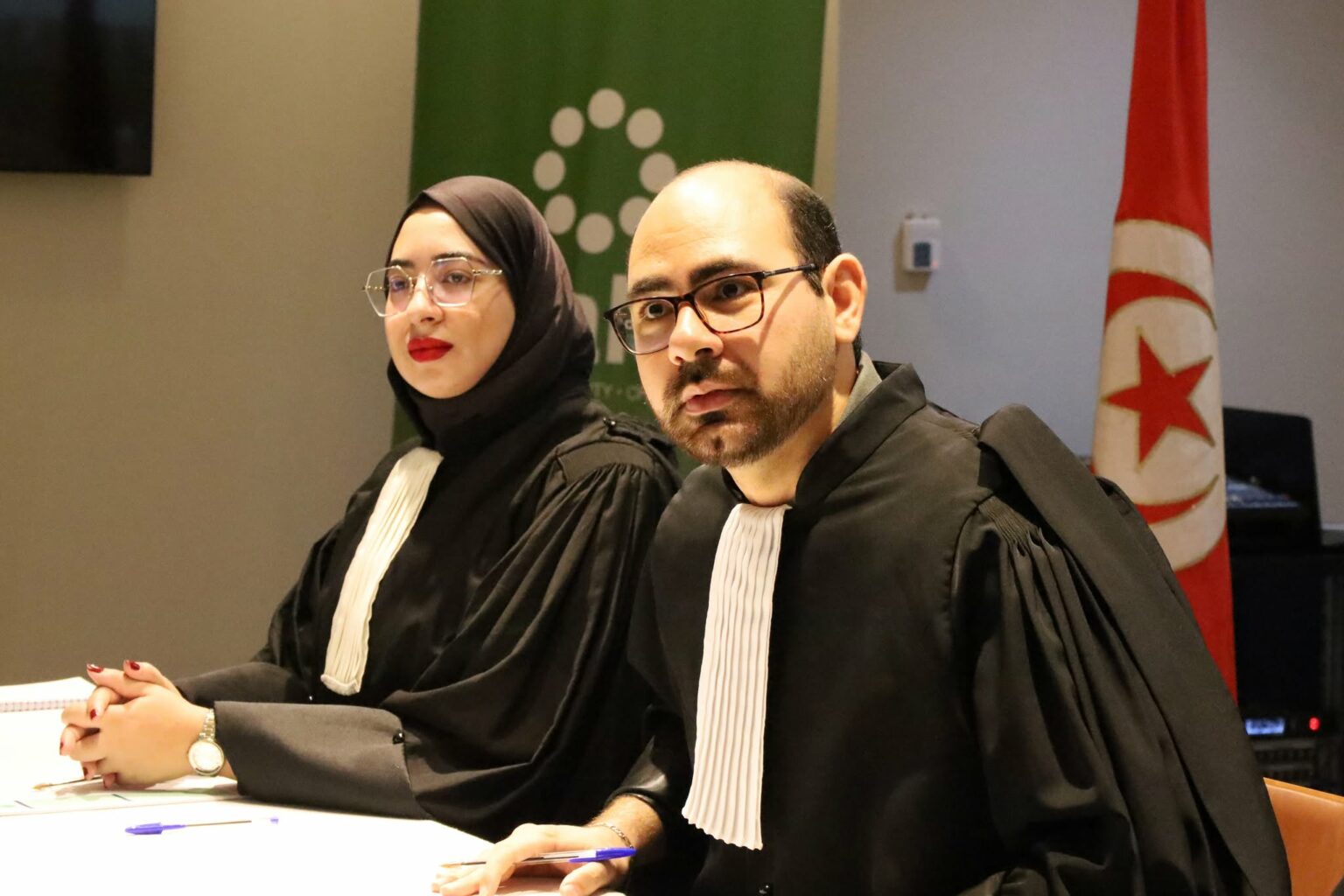
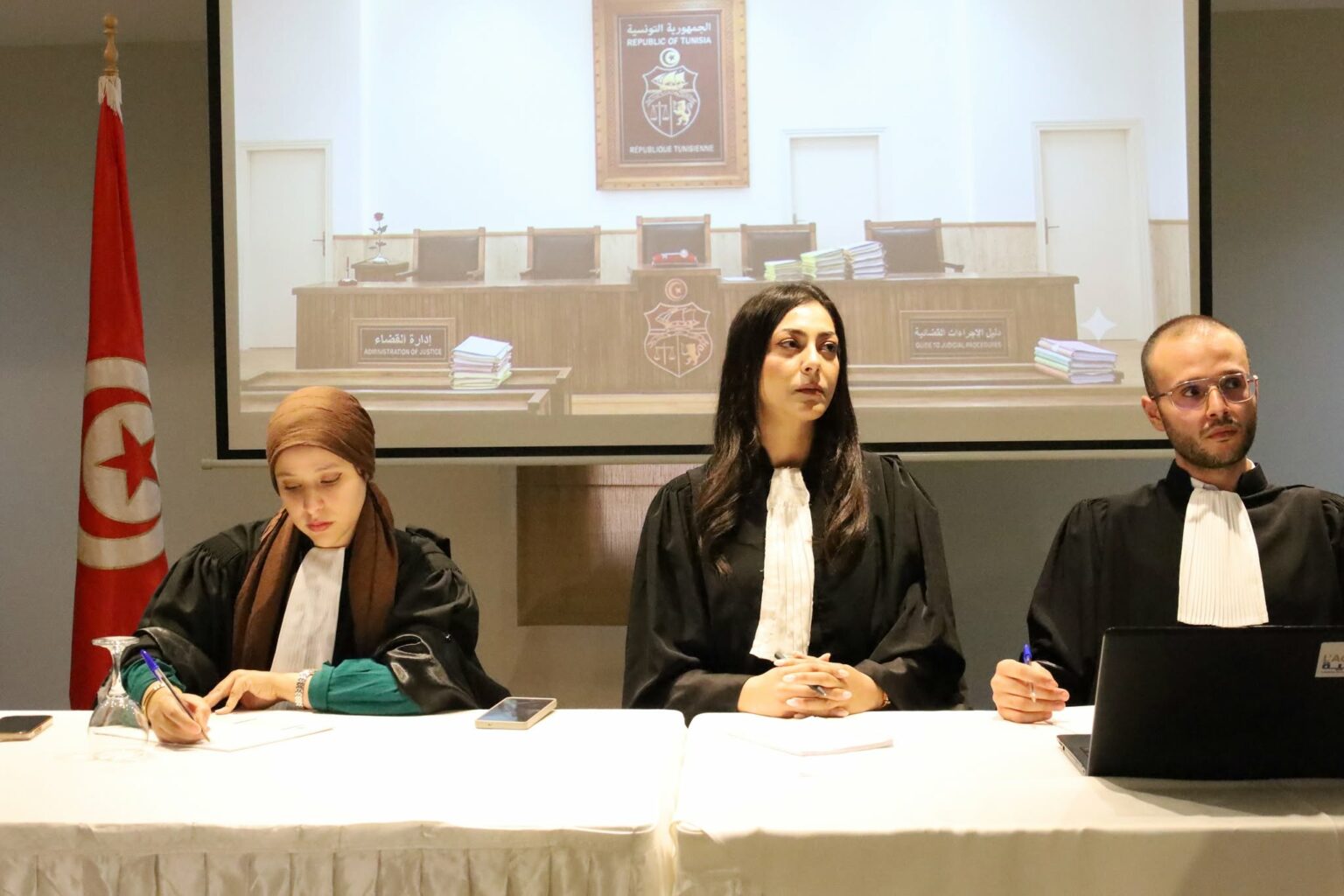
Recognizing the importance of practical legal education, Attalaki organized, on 11 July 2026, a mock trial in Tunis bringing together 25 participants, including lawyers, legal researchers, law students, and members of the Tunisian Parliament. Rather than serving as a conventional academic exercise, the initiative was designed as an immersive simulation enabling participants to confront realistic legal questions concerning Freedom of Religion or Belief through the practical application of Tunisia’s constitutional framework, domestic legislation, and the international human rights treaties ratified by the Republic of Tunisia.
Under the legal guidance of Maître Anouar Ajmi and Maître Mariem Klouz, participants progressed through the successive stages of judicial proceedings, including the legal qualification of facts, the preparation of written submissions, oral advocacy, and courtroom deliberations. The simulation encompassed criminal, administrative, and personal status disputes, offering participants the opportunity to strengthen their analytical reasoning, procedural competence, and advocacy skills while applying constitutional principles and international legal standards within realistic judicial scenarios.
Such initiatives illustrate how practical legal training can complement formal legal education by creating spaces where legal professionals test arguments, refine methodologies, and engage critically with complex questions of rights protection. Beyond the immediate educational value of the exercise, they contribute to cultivating a professional legal culture founded upon constitutionalism, judicial independence, procedural fairness, equality before the law, and respect for international human rights obligations.
Conclusion
The resilience of the rule of law depends not only upon constitutional texts or legislative reforms but upon the competence, integrity, and independence of those entrusted with interpreting and applying the law. Legal practitioners occupy a central position in transforming legal guarantees into tangible protections for individuals and communities. Their decisions shape public confidence in institutions, reinforce equality before the law, and determine the practical realization of fundamental rights.
Strengthening these capacities is therefore not a peripheral objective but a core component of democratic governance. Practical legal education, experiential learning, and sustained professional development enable practitioners to address increasingly complex legal questions with methodological rigour, ethical responsibility, and fidelity to constitutional and international legal standards.
As Tunisia continues to consolidate the effectiveness of its legal institutions, initiatives that promote applied legal training represent valuable contributions to the broader objective of strengthening the rule of law. By fostering technical excellence, encouraging principled legal reasoning, and reinforcing the effective implementation of constitutional guarantees and international human rights obligations, legal capacity-building ultimately serves the broader pursuit of justice, equality, and the protection of the rights and freedoms of all.